
Budget Backyard Makeover Ideas with Artificial Turf for Stunning Outdoor Spaces
A beautiful backyard can get expensive fast. New sod, irrigation repairs, fertilizer, mulch, edging, patio furniture, lighting, and plants all add up before the first weekend cookout even happens.
Artificial turf changes the math. It gives you a clean, green base that does not need mowing, watering, reseeding, or constant patching. Used well, it can make a tired yard feel finished without requiring a full outdoor renovation.
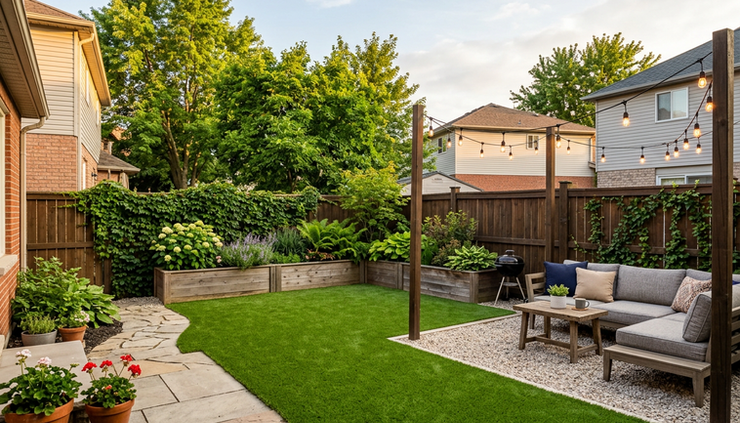
The best part is that turf does not have to mean a flat green rectangle. It can frame a patio, soften a gravel lounge, create a pet zone, define a play area, or connect small backyard sections into one polished space. With smart planning, careful installation, and a few low-cost design moves, artificial turf can help create a backyard that looks intentional, welcoming, and easy to live in.
Why artificial turf works well for a budget backyard makeover
Artificial turf has a higher upfront cost than grass seed, but it can save money and labor over time. For many yards, especially small backyards, shaded patches, high-traffic areas, or dry climates, it solves several common landscaping problems at once.
It cuts ongoing lawn costs
Natural grass needs regular attention. Depending on the yard, that may include:
Watering
Mowing
Fertilizing
Weed control
Reseeding
Pest treatment
Irrigation maintenance
Artificial turf removes most of those routine costs. It still needs occasional rinsing, brushing, and cleanup, especially if pets use it, but it does not require weekly mowing or seasonal lawn treatments.
That matters when the goal is a budget backyard makeover rather than a yard that becomes another monthly bill.
It creates instant structure
A backyard often looks unfinished because it lacks defined zones. Turf can fix that quickly.
A clean turf area can become:
A soft play space for kids
A dog run
A putting green
A lounge area next to pavers
A green border around a patio
A walkway between seating and garden beds
Even a small patch of turf can make the yard look planned. It gives the eye a resting place, which helps other low-cost materials, like gravel, mulch, and reused pavers, look more polished.
It handles high-traffic areas
Some parts of a backyard never grow grass well. The strip between a patio and gate gets worn down. The area near a playset turns muddy. Dogs create paths along fences. Shade under a tree turns grass thin.
Artificial turf can work in these difficult spaces because it does not rely on sun, soil health, or perfect watering. When installed with the right base, it drains well and stays usable after rain.
It keeps small yards looking tidy
Small backyards leave little room for visual clutter. A patchy lawn, scattered outdoor furniture, and mismatched borders can make the space feel smaller.
Artificial turf gives small areas a crisp, uniform look. Pair it with simple edges and a limited color palette, and the entire backyard feels larger and calmer.
Start with a simple backyard plan before buying turf
The easiest way to overspend is to shop before measuring. Before choosing turf, sketch the backyard. It does not need to be fancy. A rough drawing on paper works.
Mark the main fixed features:
House wall
Fence
Patio or deck
Gates
Trees
Irrigation heads
Drainage areas
Existing garden beds
Slopes or low spots
Then decide how the yard should function. A family yard needs different zones than a quiet retreat or pet-friendly space.
Ask a few practical questions:
Where do people naturally walk?
Which areas get muddy or worn?
Where does water collect?
What should stay and what can go?
Where is shade strongest?
Where do you want seating?
Do pets need a dedicated area?
Should the turf be decorative, practical, or both?
Once the purpose is clear, the turf size becomes easier to choose. Covering the entire yard may not be necessary. In many budget-friendly designs, turf works best as one main zone combined with lower-cost materials around it.
Backyard goal | Smart turf use | Budget-friendly pairing |
Low-maintenance family yard | Medium turf rectangle for play | Mulch beds and solar lights |
Pet-friendly space | Durable turf strip or fenced zone | Gravel path and washable edging |
Outdoor lounge | Turf rug effect under seating | Pavers, pea gravel, and planters |
Modern backyard | Turf panels between concrete pavers | Black edging and simple shrubs |
Small urban yard | Turf courtyard area | Vertical planters and folding furniture |
Choose the right artificial turf for your backyard style
Artificial turf is not one-size-fits-all. The right type depends on how the space will be used, how natural you want it to look, and how much maintenance you want to do.
Pick pile height based on use
Pile height is the length of the turf blades. Shorter turf tends to look neat and handles traffic well. Taller turf can look softer and more lush, but it may flatten more easily in busy areas.
For high-use zones, choose a shorter to medium pile. This works well for dog runs, play areas, paths, and spaces near gates.
For lounge areas or decorative lawns, a medium to taller pile can create a softer look. It may feel more comfortable under bare feet and better mimic a traditional lawn.
For putting greens, choose very short, dense turf made for that purpose. Standard landscape turf will not roll like a golf surface.
Look at blade shape and density
Turf blades come in different shapes. Some are designed to spring back after foot traffic. Others focus more on softness or a realistic look.
Density matters too. A denser turf often looks fuller and hides the backing better. It may cost more upfront, but it can give a smaller area a higher-end feel. If the budget is tight, use denser turf in the most visible area and less expensive materials elsewhere.
Choose color carefully
Bright green turf can look fake, especially in a yard with muted plants, wood fencing, or natural stone. A more realistic turf often has a mix of green tones with some tan thatch near the base.
For a natural backyard, choose turf with varied green and brown fibers. For a modern design, a clean medium green can work well against concrete, gravel, or dark metal edging.
Bring samples outside before buying. Look at them in morning light, full sun, and shade. Indoor lighting can make turf look very different.
Match turf to pets, kids, and shade
If pets will use the turf, look for products designed for drainage and odor control. The base and infill matter just as much as the turf itself. A good pet installation needs proper drainage under the surface.
For kids, choose turf that feels soft enough for play and has a stable base. If the area sits under play equipment, check what kind of surface depth and padding may be needed for safety.
For shady areas, turf can solve thin grass problems. Still, shaded yards may hold more moisture, so drainage and airflow matter.

Install artificial turf in a backyard step by step
A careful installation makes the difference between turf that looks clean for years and turf that wrinkles, sinks, or drains poorly. The basic process is straightforward, but each step matters.
If the yard has major drainage issues, steep slopes, large tree roots, or complicated grading, it may be worth hiring a professional for the prep work even if you handle the finishing touches.
Step 1. Measure the area and order with waste in mind
Measure the length and width of each turf section. If the area is irregular, divide it into rectangles and squares, then add them together.
Order extra material for trimming and seams. Turf has a grain direction, so every piece should face the same way. Trying to save money by turning scraps in different directions can create mismatched color patches.
Before ordering, decide where seams will go. Hide seams away from main viewing angles when possible.
Step 2. Remove grass, weeds, and loose soil
Clear the area down to a stable layer. Remove natural grass, weeds, roots, rocks, and soft soil. A flat shovel, sod cutter, or rented equipment can help depending on the yard size.
Do not install turf over living grass. It can decay unevenly, create soft spots, and lead to drainage problems.
Spray or remove weeds before installation. Some people add a weed barrier, especially along edges, but the compacted base is usually the main defense against weed growth.
Step 3. Plan for drainage
Good drainage is essential. Water needs somewhere to go. If the yard already slopes away from the house, keep that slope. If water pools, fix low spots before turf goes down.
A typical turf area uses a compacted crushed stone base that lets water pass through. Avoid creating a bowl shape with edging that traps water inside the turf area.
Near patios or foundations, be careful not to direct water toward the house.
Step 4. Add and compact the base
Spread a layer of crushed rock, decomposed granite, or another base material suitable for your region and soil. The goal is a firm, drainable surface.
Rake the base smooth, lightly wet it, then compact it with a plate compactor or hand tamper. A plate compactor works best for larger areas and can often be rented.
This step affects how the turf feels underfoot. If the base is lumpy, the turf will show it. If the base is too soft, dips may form over time.
Step 5. Shape the grade
After compacting, check the surface with a long board or level. It should be even, with a slight slope for water movement.
This is the moment to create subtle shape. A perfectly flat yard is not always the best choice. A mild slope away from structures helps with drainage and keeps the surface from feeling like a raised mat.
Step 6. Roll out the turf and let it relax
Roll the turf out in the same direction for all sections. Let it sit for a while so wrinkles soften and the material relaxes.
Pay attention to the blade direction. Turf often looks darker from one angle and lighter from another. Face the grain toward the main viewing area, such as the patio or back door.
Step 7. Trim slowly around edges
Use a sharp utility knife and cut from the back side when possible. Trim in small passes. It is easy to cut more, but impossible to add material back.
Around curves, make several small relief cuts rather than forcing one long cut. Keep edges snug against borders, pavers, or hardscape.
Step 8. Join seams carefully
If the space needs more than one piece of turf, align the blades so both sections run the same direction. Leave a small, even gap between pieces so the seam does not bunch.
Use seam tape and outdoor turf adhesive according to product directions. Press the seam evenly and avoid getting glue on the blades.
A bad seam draws the eye. Take your time here.
Step 9. Secure the edges
Use landscape nails, staples, or the recommended fasteners for your turf system. Place them along the edges and at intervals through the field as needed.
Do not drive fasteners so deep that they create puckers. The turf should be held in place without dimpling.
Step 10. Add infill and brush the turf
Many turf systems use infill to help blades stand up, add weight, and improve feel. Infill choices vary, including silica sand and pet-friendly options.
Spread infill evenly with a drop spreader or by hand for small areas. Then brush the turf against the grain with a stiff broom or power broom.
This final brushing makes the turf look fuller and more natural.

Save money without making the backyard look cheap
A budget makeover is not about choosing the lowest-cost option for everything. It is about spending where it shows and saving where it does not.
Use turf as an accent instead of covering the whole yard
Artificial turf can be most powerful in a smaller, well-defined area. A 10-by-12-foot lounge zone may do more for the yard than covering every square foot.
Good places to use turf include:
Under a small dining set
Around stepping stones
Next to a playhouse
Along a narrow side yard
Between a patio and garden bed
In a pet relief area
As a green center framed by gravel
This approach lowers material costs and leaves room in the budget for lighting, seating, plants, or privacy screens.
Combine turf with affordable ground covers
Pairing turf with other materials creates contrast and reduces square footage.
Pea gravel is often more affordable than pavers and works well for seating areas. Mulch can define garden beds and soften fence lines. Decomposed granite creates casual paths. Reused bricks or concrete pavers can become stepping stones.
The key is to repeat materials. One small gravel patch can look random. Gravel repeated around a fire pit, along a path, and beside planters looks intentional.
Keep the shape simple
Curves can look beautiful, but they can also create more waste and harder cuts. Rectangles and gentle angles are usually easier for DIY installation.
Simple shapes also make furniture placement easier. A clean turf rectangle bordered by gravel or mulch can look modern, tidy, and more expensive than it is.
Reuse what already works
Before removing everything, look for pieces worth keeping:
Existing pavers can become a walkway
Old pots can be painted one color
A weathered bench can become a focal point
Leftover lumber can frame raised beds
Stones can edge a planting area
An old table can serve as a potting station
A backyard makeover feels fresh when the space is edited, not when every item is new.
Spend on edges
Edges make budget materials look finished. Turf without a clean border can appear temporary. Turf with steel edging, paver borders, timber frames, or stone edging looks built-in.
If the budget only allows one upgrade beyond turf, choose a good edge. It helps hold the base, separates materials, and gives the space a crisp outline.
Buy in phases
A full backyard transformation does not have to happen in one weekend. Build in phases:
Clear and grade the yard.
Install the turf zone.
Add edging and gravel or mulch.
Bring in seating and shade.
Add plants, lighting, and decor.
This keeps spending manageable and gives each choice time to prove itself. After using the yard for a few weeks, it becomes clearer where a path, planter, or light should go.
Creative artificial turf design ideas for a stunning outdoor space
Artificial turf is flexible. It can look playful, modern, relaxed, or polished depending on how it is used.
Create a turf and paver checker path
Set square concrete pavers into turf with even spacing. This works well from the back door to a seating area, shed, or gate.
The pavers create a clean walking surface, while the turf softens the look. This design can make a small yard feel custom without using expensive stone.
For best results, keep the spacing consistent and use a strong base under both the pavers and turf.
Frame a gravel lounge with turf
Gravel is practical for outdoor seating, but too much gravel can feel harsh. Turf brings softness back into the design.
Try a gravel seating circle or rectangle with a turf border. Add two chairs, a small table, and string lights. The result feels like a dedicated outdoor room rather than leftover yard space.
Build a pet-friendly corner
A small turf zone can work well for dogs when it drains properly and is cleaned regularly. Use edging to separate it from planting beds. Add a nearby hose bib or watering can for easy rinsing.
Choose durable turf and pet-friendly infill. Avoid placing the pet zone in a low spot where water collects.
A narrow side yard can become an easy-care dog run with turf, gravel edging, and a simple gate.
Use turf as an outdoor rug
Instead of thinking of turf as a lawn, use it like a rug. Place it under a pergola, near a deck, or beneath a compact bistro set.
This works especially well for renters or homeowners with small concrete patios. A properly installed turf section can soften hard surfaces and make the area feel more comfortable.
Add a small putting green
A putting green can be a fun feature if the yard has a flat area. It does not need to be large. Even a compact strip with one or two cups can add personality.
Use putting green turf rather than landscape turf. Add a fringe with slightly taller turf if the budget allows.
Make a kid-friendly play patch
Artificial turf can turn a muddy corner into a play area. Place it near seating so adults can relax nearby. Add a small playhouse, water table, sandbox, or climbing structure based on age and space.
If equipment has fall-height concerns, use the right safety underlayment. Regular turf over a hard base is not the same as a certified playground surface.
Mix turf with raised garden beds
Green turf beside raised beds creates a tidy garden path. It keeps the walking area clean and reduces mud after watering.
This idea works well in narrow yards. Use turf down the middle, raised beds along the sides, and simple drip irrigation for vegetables or herbs.
Design a low-water courtyard
For dry regions, turf can work as a small green feature within a low-water yard. Surround it with gravel, boulders, native plants, and shade.
The goal is balance. A focused turf area gives the eye a cool green resting point while the rest of the yard stays water-conscious and low maintenance.

Finish the makeover with low-cost details that matter
Once the turf is installed, the yard may already look cleaner. The finishing details make it feel complete.
Add lighting where people gather and walk
Outdoor lighting does not need to be complicated. Solar path lights, string lights, and battery-powered lanterns can make the space usable in the evening.
Place lights where they serve a purpose:
Along steps
Near gates
Around seating
Beside pathways
Under a pergola
Near outdoor dining areas
Warm white light usually feels more inviting than cool blue-white light.
Use plants to soften the edges
Artificial turf looks best when paired with living elements. Even a few plants can keep the yard from feeling flat.
Good budget-friendly options include:
Ornamental grasses in planters
Herbs near outdoor dining
Drought-tolerant perennials
Small shrubs along fences
Climbing plants on a trellis
Container plants grouped in threes
Choose plants that fit the sun exposure and climate. Healthy simple plants look better than fussy plants that struggle.
Create privacy without major construction
Privacy can transform a backyard, but fences and built-in structures can be expensive. Try lower-cost options first.
Consider:
Outdoor curtains on a simple frame
Reed or bamboo screening attached to existing fencing
Tall planters with grasses
Lattice panels with climbing plants
Shade sails
A row of large pots
Privacy works best when it blocks specific sightlines. You may not need to screen the whole yard.
Refresh old furniture
Outdoor furniture can take a large bite out of the budget. Before buying new, clean what you have.
A few cheap updates can go a long way:
Scrub frames with mild soap
Replace faded cushions
Spray paint metal chairs
Sand and seal wood benches
Add an outdoor rug near hardscape
Use matching pillow covers
Keep colors simple. Two or three repeated colors make mixed furniture look more coordinated.
Add one focal point
Every backyard benefits from one feature that catches the eye. It does not need to be expensive.
A focal point might be:
A fire bowl
A painted bench
A large planter
A small water feature
A trellis
A dining table
A cluster of lanterns
Place it where it can be seen from the house. That way, the makeover improves the view even when no one is outside.
Keep artificial turf looking good after installation
Artificial turf is low maintenance, not no maintenance. A little care keeps it fresh.
Rinse dusty areas as needed. Remove leaves with a blower, rake, or broom. Brush high-traffic spots to lift flattened blades. Clean pet areas often and use products made for turf if odor becomes an issue.
Watch the edges during the first season. If a corner lifts or a seam shifts, fix it early. Small repairs are easier than large ones.
Avoid placing very hot items directly on turf. Fire pits, grills, and reflective surfaces can damage synthetic fibers. Put grills and fire features on pavers, concrete, or another heat-safe surface.
Heavy furniture can leave impressions. Move chairs and tables now and then, or use furniture pads to spread the weight.
A sample budget-friendly backyard makeover plan
Here is one simple plan for a small to medium backyard that needs a full refresh without a luxury budget.
Main turf zone
Install a rectangular turf area near the center of the yard. Use it as the flexible space for kids, pets, lounging, or casual games.
Gravel seating corner
Add pea gravel in one corner with two chairs and a small side table. Use paver stones under chair legs if needed for stability.
Mulch planting beds
Run mulch beds along the fence. Add a few tough shrubs, ornamental grasses, or native plants suited to the area.
Paver walkway
Use simple concrete pavers to connect the back door to the turf and seating zone.
Lighting
Hang string lights over the seating area and add solar lights near steps or paths.
Privacy
Place tall planters or a trellis where the yard feels most exposed.
This kind of plan works because each piece has a job. The turf creates the clean green center. Gravel adds a social zone. Plants soften the fence. Lighting makes the yard usable at night. Privacy makes it comfortable.
The result feels like a full makeover, even when the project uses basic materials.
Common mistakes to avoid
Artificial turf can look great, but shortcuts show. Avoid these common budget traps.
Skipping the base preparation
The base is not the place to rush. Poor prep can lead to wrinkles, dips, drainage issues, and uneven seams.
Spend time making the surface stable and smooth. It is easier to do it right before the turf goes down than to fix it later.
Choosing the cheapest turf without samples
Low-cost turf might work for some spaces, but do not buy only by price. Check texture, color, backing, drainage, and warranty information.
Always view samples outside. Turf that looks fine online may look too shiny or too bright in the yard.
Covering too much space
More turf is not always better. A yard can feel more designed when turf is part of a mix. Use it where it adds comfort, function, or visual impact.
Ignoring heat
Artificial turf can get warm in direct sun. Plan shade where people will sit or kids will play. Use umbrellas, shade sails, pergolas, or trees when possible.
In hot climates, lighter surrounding materials and shaded seating can make the whole yard more comfortable.
Forgetting maintenance access
Leave practical access to gates, hose bibs, sheds, and utility areas. A beautiful layout becomes frustrating if it blocks daily use.
Bring the backyard together one smart choice at a time
Artificial turf can be the anchor for a backyard that looks finished, stays easier to care for, and supports the way the space is actually used. The smartest makeovers do not rely on turf alone. They pair it with clean edges, affordable ground covers, simple lighting, comfortable seating, and a few well-chosen plants.
Start by choosing the main purpose of the yard. Then install turf where it will make the biggest difference. Build the rest around it with materials that fit the budget and the home.
A stunning outdoor space does not have to start with a full demolition or oversized project. It can start with one clean green zone, a better path, a place to sit, and a reason to step outside more often.


Comments