
Stunning Before and After Artificial Turf Transformations for a Greener Low Maintenance Lawn
A tired lawn can make the whole property feel neglected, even when the house, patio, and garden beds are in great shape. Patchy grass, muddy corners, brown spots, and uneven growth draw the eye for all the wrong reasons. The good news is that some of the most dramatic curb appeal upgrades do not require a full yard redesign.
Artificial turf can turn a problem lawn into a clean, green, usable outdoor space that looks cared for every day of the year. The best before and after transformations share the same pattern: less maintenance, less water use, better drainage, and a lawn that stays inviting through heat, shade, foot traffic, and busy family life.

Why artificial turf makes such a dramatic before and after
The most striking artificial turf transformations are not only about color. Yes, the deep green finish is usually the first thing people notice. But the real change comes from how the yard functions.
A natural lawn can look great for a short window of the year, then struggle when weather, shade, pets, or heavy use take over. Artificial turf solves many of those common weak points. It creates a consistent surface that does not need mowing, regular fertilizing, reseeding, or constant watering to stay green.
That makes it especially useful for:
Front yards where curb appeal matters every day
Backyards with kids, pets, or frequent foot traffic
Small lawns that are hard to mow efficiently
Shaded side yards where grass does not thrive
Pool areas where mud and clippings become a nuisance
Drought-prone regions where water conservation matters
Rental properties and second homes that need easy upkeep
The best part is the visual payoff. A yard that once looked uneven, dusty, or overgrown can become a clean outdoor room. Edges look sharper. Patio furniture stands out. Garden beds look more intentional. Even simple features, like stepping stones or a fire pit, feel more finished when the lawn around them is even and green.
Before and after transformation ideas that show what turf can do
Artificial turf can solve very different lawn problems. Some projects are about curb appeal. Others are about daily use. Here are several common transformations and what makes each one work.
From patchy front yard to polished curb appeal
A front lawn has a tough job. It needs to look good from the street, frame the home, and handle sun exposure that may be harsh for much of the day. When natural grass starts thinning, the entire exterior can look less cared for.
Artificial turf gives the front yard a steady, manicured look without weekly mowing. In a before photo, the lawn may have bare areas near the sidewalk, brown spots near the driveway, and uneven color across the yard. In the after photo, the grass line looks crisp, the green is consistent, and the home looks brighter from the curb.
This type of project works especially well when paired with:
Fresh mulch or decorative rock
Defined borders around trees and garden beds
Clean edging along sidewalks and driveways
Low-water shrubs or native plants
Simple landscape lighting
The result is not just a greener lawn. It is a more finished entry to the home.
From muddy pet area to clean play space
Pets can be hard on natural grass. Repeated running paths, digging, and bathroom areas can create compacted soil, bare patches, and muddy sections. Once those spots appear, they often get worse after every rain.
Pet-friendly artificial turf can turn that messy area into a more usable space. The base matters here as much as the turf itself. A well-built pet turf system usually includes drainage layers, compacted base material, and infill selected for odor control and rinsing.
After the transformation, the yard can feel easier to maintain. Mud gets reduced. Paws stay cleaner. The lawn does not need time to regrow after heavy use.
For pet areas, choose turf with:
Strong backing and good drainage
Short to medium pile height for easier cleaning
Durable fibers that stand up to activity
Infill designed for pet use
A layout that allows easy rinsing
A turf installer can also grade the area so water moves away from the house and does not collect in low spots.
From shaded side yard to useful walkway
Side yards often become forgotten spaces. They may get too little sunlight for healthy grass, but too much traffic to stay clean as bare soil. The result can be a narrow path of dirt, weeds, or muddy ground between the front and back yard.
Artificial turf can make this kind of space feel intentional. In the before photo, the side yard may look dark and worn. In the after photo, it becomes a neat green walkway, especially when combined with pavers, gravel, or a stepping-stone path.
This transformation is practical as well as attractive. It can help reduce tracked-in dirt, make trash bin access easier, and create a cleaner route for kids or pets.
For narrow spaces, lower pile turf often works best because it looks tidy and is easier to keep free of leaves and debris.
From dry backyard to year-round outdoor room
Backyards are meant to be used, but dry, uneven grass can make the space less appealing. Furniture wobbles. Bare patches turn dusty. After rain, low spots become muddy.
Artificial turf can turn a dry backyard into an outdoor room that feels ready for everyday use. Add a dining set, lounge chairs, a pergola, or a fire pit, and the lawn becomes part of the living space rather than a maintenance problem.
This is one of the most satisfying before and after projects because the whole yard feels more usable. The surface stays green, drains well when properly installed, and creates a soft area for bare feet, games, and relaxing.

The practical benefits behind the greener look
A beautiful after photo grabs attention, but the practical benefits are what make artificial turf appealing over the long term. The right turf system can reduce weekend chores, lower outdoor water use, and make the lawn more dependable through the seasons.
Low maintenance without losing the lawn look
Natural grass asks for regular care. Mowing, edging, watering, fertilizing, aerating, weeding, and reseeding all take time. Some homeowners enjoy that work, but many would rather spend their weekends using the yard instead of maintaining it.
Artificial turf is not maintenance-free, but it is low maintenance. The usual care is simple:
Remove leaves and debris with a blower or rake designed for synthetic turf
Rinse high-use areas as needed
Brush the fibers occasionally in busy spots
Clean pet areas more often
Check edges and seams after storms or heavy use
There is no weekly mowing schedule. No grass clippings. No seasonal reseeding. No waiting for brown spots to fill in.
Water conservation that makes sense
Outdoor irrigation can use a large amount of household water, especially in hot and dry regions. Artificial turf can reduce the need for routine lawn watering, which makes it a practical option for homeowners who want a green yard with less water demand.
This benefit is especially appealing in areas with watering restrictions or long dry spells. A turf lawn does not need irrigation to stay green. It may still need occasional rinsing to clean dust, pollen, or pet areas, but that is very different from keeping a natural lawn alive during heat.
The visual effect is simple: the lawn stays green even when nearby grass turns brown.
Year-round greenery with fewer seasonal swings
Natural lawns change with the seasons. That can be beautiful, but it can also mean brown patches, dormant periods, weeds, and bare spots. Artificial turf keeps a more consistent appearance.
That year-round color is one reason many before and after photos look so dramatic. The after image shows a lawn that is ready for summer cookouts, fall gatherings, winter curb appeal, and spring garden refreshes.
For homeowners who value a tidy look all year, this consistency is one of turf’s biggest strengths.
Better use of difficult spaces
Some areas simply do not support healthy grass. Deep shade, poor soil, high foot traffic, slopes, and tight courtyards can all create stubborn lawn issues. Artificial turf works well in many of these spaces because it does not rely on sunlight, soil quality, or frequent watering.
That means the transformation can target the exact spot that causes the most frustration. A small muddy patch by the back door can become clean and green. A hard-to-mow slope can become a neat lawn feature. A rooftop or balcony can gain a soft green surface where natural grass would not work.
How to choose the right artificial turf for your lawn
Not all turf looks or performs the same. The right choice depends on how the space will be used, how much traffic it will get, and what kind of look fits the home.
Start with how the lawn will be used
Before comparing blade shapes or color tones, decide what the lawn needs to do. A front yard and a dog run need different turf. So do a putting green, pool border, and family play area.
Use this guide as a starting point:
Lawn use | What to look for | Why it matters |
Front yard curb appeal | Natural color blend, medium pile height, soft thatch | Creates a realistic lawn from the street |
Pets | Strong drainage, durable fibers, pet-safe infill | Helps with cleaning and odor control |
Kids and play areas | Soft feel, resilient fibers, cushioned base if needed | Improves comfort underfoot |
Pool areas | Good drainage, shorter pile, heat-conscious material | Reduces soggy spots and loose clippings |
Side yards | Shorter pile, easy-clean surface, secure edges | Handles traffic in narrow spaces |
Putting greens | Very short pile, smooth surface, specialty installation | Supports ball roll and precision |
A good turf choice begins with function. The best-looking product will disappoint if it is not built for the way the yard gets used.
Compare pile height and density
Pile height is the length of the turf fibers. Taller turf can look lush, but it may need more brushing to stay upright. Shorter turf often looks tidy and works well in high-traffic areas.
Density refers to how full the turf looks. Denser products usually feel softer and more realistic, while lower-density products can look thinner. For lawns that will be seen up close, density matters.
For most residential lawns, a medium pile height with good density creates a balanced look. It feels comfortable, photographs well, and does not look overly shaggy.
Look for natural color variation
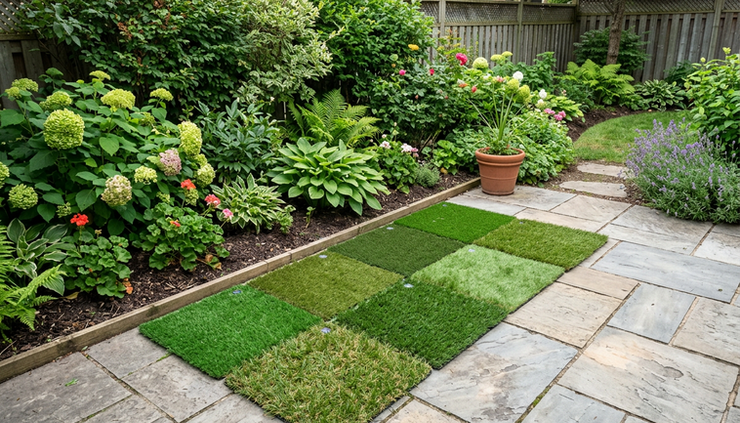
The most realistic turf is not one flat shade of green. Natural grass has color variation, including olive, field green, lighter blades, and brown thatch near the base. Turf with blended tones will usually look more believable than bright single-color turf.
When reviewing samples, place them outside in direct sun and shade. Indoor lighting can change how turf looks. A sample that seems perfect inside may look too shiny or too blue-green outdoors.
Think about heat and comfort
Artificial turf can get warm in direct sun. This is common with many outdoor surfaces, including pavers, decking, and concrete. If the lawn gets full sun, ask about turf products and infills designed to reduce heat buildup.
Practical design choices can also help:
Add shade with trees, umbrellas, or a pergola
Use lighter hardscape materials nearby
Choose turf with a realistic, not overly dark, color
Rinse the surface before barefoot use on very hot days
Create planted borders that soften the space
Comfort matters most in areas where kids, pets, or bare feet will use the lawn often.
Ask about backing, drainage, and infill
The visible blades get most of the attention, but the layers underneath affect performance. Backing, drainage design, base preparation, and infill all play a role in how the turf feels and lasts.
Infill helps support the fibers, adds weight, and can improve the feel underfoot. Different infill materials suit different uses. Pet areas, play areas, and general front lawns may each call for a different choice.
When comparing options, ask installers to explain the full system, not just the turf roll.
What happens during artificial turf installation
A great after photo starts below the surface. Proper installation makes the difference between turf that looks smooth and natural and turf that shifts, wrinkles, or drains poorly.
While every yard is different, most residential installations follow a similar process.
The old lawn and debris are removed
The crew removes existing grass, weeds, roots, and loose soil. This step creates room for the base layers and helps prevent organic material from breaking down under the turf.
In some yards, removal also exposes drainage issues or uneven soil that should be corrected before moving forward.
The area is graded for drainage
Good grading helps water move away from the home and toward the right drainage areas. This step is easy to overlook, but it matters. Turf itself can drain, but water still needs somewhere to go.
Low spots may need to be filled. High spots may need to be cut down. The goal is a smooth, stable surface with a gentle slope where needed.
A compacted base is built
Installers usually add crushed stone or similar base material, then compact it. This creates a firm foundation under the turf. The base helps with drainage, prevents sinking, and supports foot traffic.
This stage often has the biggest impact on the final look. A poorly prepared base can lead to waves, dips, or uneven seams. A solid base helps the finished lawn look clean and level.
Weed barrier may be added when appropriate
Some projects include a weed barrier fabric. It can help limit weed growth from below, though weeds can still appear along edges or from seeds that land on top. The installer should choose materials based on the site conditions, drainage needs, and local soil.
Turf is rolled out, cut, and seamed
Next, the turf is rolled into place. The crew checks the grain direction so the blades face the right way. This step affects how the lawn reflects light and how natural it looks from the main viewing areas.
The turf is then cut around patios, trees, garden beds, walkways, and borders. Where multiple rolls meet, seams are joined carefully so they blend into the lawn.
Edges are secured
The edges are fastened so the turf stays in place. Clean edging is one of the details that separates a professional-looking installation from a rushed one. Tight borders along concrete, pavers, fences, and planting beds make the new lawn look built-in rather than placed on top.
Infill is spread and brushed in
Infill is spread across the turf and brushed into the fibers. This helps the blades stand upright, adds weight, and improves the feel of the surface. The amount and type of infill depend on the turf product and how the lawn will be used.
After brushing, the lawn begins to take on its finished look.

Design details that make artificial turf look more natural
The most convincing turf projects do not rely on the grass alone. They use design details to make the lawn feel connected to the rest of the yard.
Add strong borders
Borders give turf a clean stopping point. They also make the space feel planned. Good border options include:
Concrete mow strips
Paver edges
Steel or aluminum landscape edging
Decorative gravel
Mulched planting beds
Natural stone
A clear edge keeps the turf from feeling like a green carpet dropped into the yard.
Mix turf with real plants
Artificial turf looks more natural when it sits near living plants. Shrubs, ornamental grasses, perennials, and small trees add movement and seasonal interest. They also soften the edges of the lawn.
Low-water plants pair especially well with turf. Together, they create a green yard that needs less irrigation than a traditional lawn-heavy design.
Use curves where they fit
Straight turf lines can look sharp and modern, especially near patios and driveways. Curved edges can feel softer and more organic. The right choice depends on the home, the yard shape, and the surrounding landscape.
For small lawns, a gentle curve can make the space feel less boxy. For modern homes, crisp straight lines may be the better match.
Break up large areas
A large, unbroken turf area can look flat. Adding visual breaks helps. Consider stepping stones, a tree island, a seating area, or a planting bed. These elements make the lawn feel like part of a full landscape design.
This approach also helps with practicality. A path can guide traffic. A seating area can reduce wear in one spot. A tree or pergola can add shade.
Pay attention to the view from the house
Most people view their lawn from inside the home as much as from the yard. Before installation, look through windows and patio doors. Identify the most important sightlines.
The turf grain, seams, and design layout should account for those views. A lawn that looks great from the kitchen window will be enjoyed every day, not just during backyard gatherings.
Common mistakes to avoid
Artificial turf can be a smart upgrade, but shortcuts can hurt the final result. Watch for these common mistakes before committing to a project.
Choosing turf based only on color
Color matters, but it is only one part of the decision. A turf sample should also feel good, drain well, and suit the lawn’s purpose. A beautiful product designed for light decorative use may not hold up in a busy pet area or play space.
Ignoring drainage
Drainage should be discussed before installation starts. Poor drainage can lead to puddles, odors in pet areas, or a base that shifts over time. Ask how the installer will handle existing low spots, compacted soil, and runoff.
Skipping base preparation
The base is not the exciting part of the project, but it is one of the most important. Without proper excavation, grading, and compaction, the finished lawn may develop dips or wrinkles.
Forgetting about surrounding materials
Turf does not exist in isolation. It needs to meet patios, fences, planting beds, pathways, and drainage areas cleanly. If those edges are neglected, the project can look unfinished.
Picking the wrong turf for pets
Pet turf needs special attention. Drainage, cleaning access, and infill choice all matter. A general lawn turf may work for occasional pet use, but dedicated pet areas should be designed for easy rinsing and odor control.
How to plan your own before and after transformation
A successful project starts with a clear plan. Before choosing turf, take a slow walk around the yard and note what is working, what is not, and how the space should feel after the upgrade.
Take useful before photos
Before photos are not just for fun. They help identify problem areas and track the impact of the project.
Take photos from:
The street
The front door
Main windows
The patio or deck
The back corners of the yard
Any muddy, shaded, or worn spots
These views help guide design decisions. They also make the after photos more satisfying.
List the lawn problems in plain terms
Write down the issues that need solving. Keep it practical.
For example:
The side yard turns muddy after rain
The front lawn browns out every summer
The dog has worn a path along the fence
The mower cannot reach the narrow strip by the patio
The kids need a cleaner play area
The yard looks dull from the kitchen window
This list helps narrow the turf type, base design, and layout.
Decide where turf makes the most sense
The whole yard does not always need turf. Sometimes the best transformation comes from replacing only the problem lawn area and improving the rest with plants, gravel, mulch, or hardscape.
Artificial turf works well when it has a clear purpose. Use it where a green, durable, low-maintenance surface adds real value.
Review samples outdoors
Ask for samples and look at them in the actual yard. Check them in sun, shade, morning light, and late afternoon light. Walk on them if possible. Compare how they look near your home’s exterior materials.
A sample that blends well with the house, plants, and hardscape will usually create a better finished result.
Ask detailed installation questions
Before hiring an installer, ask about:
Excavation depth
Base material
Drainage plan
Seam placement
Edge fastening
Infill type
Pet area options
Warranty details
Maintenance recommendations
Clear answers show that the installer understands the full system, not just the surface layer.
What the best final results have in common
The strongest before and after artificial turf transformations share a few traits. They look clean, but not fake. They solve a real problem. They connect the lawn to the rest of the outdoor space.
A great finished project usually includes:
Realistic turf color Blended green tones and thatch help the lawn look natural.
Smooth grading The surface feels even and drains correctly.
Clean edges Borders along patios, beds, and walkways look crisp.
Smart plantings Living greenery softens the turf and adds texture.
Purposeful layout The turf supports how the yard is actually used.
Simple maintenance plan The owner knows how to brush, rinse, and clean the surface.
When those pieces come together, the after photo tells a clear story. The yard no longer looks like a chore waiting to happen. It looks ready.
A greener lawn can also be an easier lawn
Artificial turf is not the right choice for every yard, but it can be a strong solution for lawns that demand too much water, time, and repair. The appeal is both visual and practical. A well-planned turf installation can bring year-round greenery, reduce routine lawn chores, and make difficult spaces more useful.
The most successful projects start with honest questions. Where does natural grass struggle? How does the yard need to function? What look fits the home? Which turf product matches the level of activity?
Answer those questions first, then choose materials and installation details that support the goal. With the right plan, a patchy or high-maintenance lawn can become one of the most inviting parts of the property.


Comments