
High End Artificial Turf Putting Greens for Better Play, Less Maintenance
A great putting green does more than fill a corner of the yard. It gives you a place to practice with purpose, settle a friendly wager, entertain guests, or add a polished feature to a commercial property. The best ones feel intentional. They roll true, drain well, hold their shape, and look inviting even after heavy use.
That is where high-end artificial turf has changed the conversation. Natural grass greens are beautiful, but they ask for constant attention. Mowing height, watering, fertilizing, aeration, pest control, disease management, and weather stress all affect the way a natural green performs. Artificial turf removes much of that burden while still giving golfers a surface that can be shaped, contoured, and tuned for real practice.
For homeowners, that means more time putting and less time maintaining. For golf facilities, resorts, offices, apartment communities, and entertainment venues, it means a durable amenity that stays ready for guests. A quality artificial turf putting green can turn unused space into something people actually use.

Why artificial turf works so well for putting greens
Artificial turf is not just a shortcut for people who do not want to mow. At the high end, it is a performance material. The fibers, backing, base construction, infill, and installation method all affect how the ball rolls and how the green holds up over time.
A premium putting green should offer three things:
Consistent roll
Reliable drainage
A clean, finished look
Natural grass can deliver a wonderful playing experience, but it changes by the day. Rain, heat, shade, foot traffic, soil compaction, and mowing schedules all influence speed and smoothness. A putting green that was quick on Friday may feel slower after a wet weekend. A shaded area may thin out while a sunny edge grows faster.
Artificial turf gives more control. Once properly installed, the surface stays much more predictable. The ball does not have to fight grain, bare patches, or mower marks. Good turf also avoids the muddy, uneven look that can happen when natural grass gets heavy backyard use.
That predictability matters for practice. When a putt breaks, it should be because of the contour, not because the surface has a surprise bump or patch of stressed grass. A well-built artificial green lets golfers focus on stroke, aim, pace, and reading slope.
Artificial turf gives you lower maintenance without a neglected look
The first thing many people notice is the maintenance difference. Natural grass putting greens demand a level of care closer to a golf course than a typical lawn. They need frequent mowing with specialized equipment, careful watering, topdressing, fertilization, edging, and attention to weeds and pests.
Artificial turf does not eliminate care, but it reduces it dramatically.
A high-end artificial green usually needs simple upkeep:
Remove leaves, twigs, and debris
Rinse dusty areas when needed
Brush fibers to keep them standing properly
Check infill levels after heavy use
Keep surrounding landscaping trimmed back
Clean spills or pet areas promptly
That routine is much easier than managing living turf. It also makes the green more useful. After a rainy week, a natural grass green may be soft, slow, or off limits. Artificial turf with a properly built base can drain well and return to use quickly.
For homeowners, the maintenance savings are practical. No constant watering schedule. No mowing at green height. No worrying about brown patches right before guests arrive. For commercial spaces, reduced upkeep can make the difference between an amenity that stays attractive and one that becomes a chore.
The visual benefit matters too. A premium artificial green keeps its color and shape through seasonal changes. In hot or dry regions, it avoids summer browning. In colder areas, it keeps the property looking finished when natural grass is dormant.
Durability makes artificial turf a smart long-term choice
Putting greens see concentrated use. People stand in the same spots, walk the same paths, chip from repeated angles, and gather around the cup. Natural grass can wear down fast in those high-traffic zones. Thin turf, compacted soil, and uneven areas can appear when the green gets regular play.
Artificial turf is built for traffic. High-quality products use dense fibers and strong backing systems that resist matting and separation. When paired with a compacted base and proper drainage, the green can handle daily use far better than a small natural practice green in a residential setting.
Durability becomes even more important in commercial spaces. A hotel courtyard, clubhouse patio, office campus, family entertainment center, or apartment community may see players with very different skill levels. Some will use putters. Some will drag feet. Some will step around the cup again and again. A strong artificial turf system can take that wear while keeping the surface playable.
A durable green also protects the design. Slopes, tiers, fringe areas, and cup placements need to keep their form. If the surface shifts, wrinkles, puddles, or separates at the edges, the whole green feels cheaper. Good materials and careful installation prevent those problems.
The best results come from looking beyond the turf itself. The surface is only one part of the system. A long-lasting green also depends on excavation depth, base rock, compaction, edging, seams, cup setting, and drainage planning.

Playability is where high-end turf stands apart
Not all artificial turf is suitable for putting. General landscape turf may look good from a distance, but it will not give the same roll as a real putting surface. The fibers may be too tall, too soft, too directional, or too uneven for serious practice.
High-end putting turf is designed for ball performance. It uses shorter, denser fibers that allow the ball to roll smoothly across the surface. The backing and infill system help control speed. A skilled installer can also adjust the base and topdressing to fine-tune the way the green plays.
Good playability includes more than speed. It includes:
Smooth start and finish of the roll
Predictable break on slopes
Clean cup edges
Stable footing
Realistic fringe transitions
Consistent response from different angles
Golf enthusiasts often want a green that helps with real improvement. That means designing for the putts you actually need to practice. A flat green can help with stroke mechanics, but it gets boring fast. A green with gentle breaks, multiple cup locations, and varied distances builds more skill.
For recreational spaces, playability can be more social. A backyard green may include a few fun breaks, a chipping area, and a wider fringe where beginners can stand comfortably. A commercial green may favor durability and flow, with clear entry points and enough space for several people to play without crowding.
The right speed depends on the goal
A faster green feels exciting, but faster is not always better. Very quick surfaces expose flaws and can make short putts feel less forgiving. Slower surfaces may suit family play, casual guests, or mixed-use areas.
The best speed depends on how the green will be used.
Use case | Best surface feel | Design priority |
Serious home practice | Smooth and moderately quick | Realistic breaks and repeatable roll |
Family backyard play | Comfortable and forgiving | Safety, space, and fun cup locations |
Commercial amenity | Durable and consistent | Traffic flow and easy upkeep |
Short-game area | Firm enough for control | Fringe, landing zones, and ball containment |
A professional installer can explain turf speed options and show samples. When possible, roll putts on a demo surface instead of choosing from appearance alone.
Artificial turf performs in more places than natural grass
Natural grass has limits. It needs sunlight, soil health, water, and air movement. A shaded side yard, rooftop terrace, compact courtyard, or high-use patio may not support a healthy putting green. Artificial turf opens up those spaces.
That flexibility is one reason high-end artificial turf putting greens have become popular for residential and commercial design. They can fit into compact yards, pool areas, side setbacks, rooftop decks, indoor training rooms, clubhouse patios, and hospitality courtyards.
Artificial turf also works well where water conservation matters. In many parts of the United States, homeowners and property managers want outdoor spaces that look good without heavy irrigation. A putting green can replace a thirsty patch of lawn while creating a more useful feature.
Still, it needs the right planning. Artificial turf can get warm in direct summer sun, especially in hotter regions. Shade structures, nearby planting, lighter surrounding hardscape, and occasional rinsing can help improve comfort. Drainage also matters in rainy climates. The green should move water away from the surface rather than trapping it under the turf.
How to select the right putting turf
Choosing turf by color alone is a mistake. A bright green sample may catch the eye, but performance depends on construction. Before selecting a product, think about how the green should play and who will use it.
Start with the purpose of the green
A serious golfer will have different needs than a family that wants a fun backyard feature. A resort or apartment community will have different demands than a private home.
Ask these questions before choosing turf:
Will the green be used for daily practice or casual play?
Do you want putting only, or putting plus chipping?
How fast should the surface feel?
Will children, pets, or guests use the space often?
Is the green in full sun, shade, or mixed conditions?
Will it be installed outdoors, indoors, or on a rooftop?
How much surrounding landscaping will drop leaves or debris?
Clear answers make turf selection much easier.
Look at fiber type and density
Putting turf usually has a low pile height and dense construction. The fibers should feel tight and even. They should support the ball without making it wobble or bounce.
Nylon is known for firmness and resilience. Polypropylene is also common in putting surfaces and can provide a smooth roll. Some systems combine materials for a specific feel. The best choice depends on the desired speed, climate, and use.
Density matters because sparse turf can show wear, affect roll, and look less refined. A dense surface feels more finished and often performs better over time.
Test the roll before committing
If a supplier offers samples, use them. Roll a golf ball across the turf from different directions. Look for wobble, drag, or directional pull. A small sample cannot fully represent a finished green, but it can reveal obvious issues.
Even better, visit a completed installation or showroom. Bring your putter. Hit short, medium, and longer putts. Pay attention to pace control and how the ball slows near the cup.
A good question to ask is simple. Would this surface help you practice, or would you outgrow it quickly?
Do not forget fringe turf
The putting surface gets the most attention, but the fringe shapes the experience. Fringe turf gives the green a natural border, creates a place to stand, and allows for chipping or bump-and-run practice.
A realistic fringe often uses a slightly taller turf than the putting area. It can define the shape of the green and soften the transition into landscaping, pavers, or patios.
For high-end residential work, fringe design can make the difference between “installed turf” and a custom golf feature.

Installation quality decides how the green performs
Premium turf cannot overcome poor installation. A putting green needs a stable, smooth, well-drained foundation. If the base is uneven, the ball will show it. If the drainage is poor, water can collect. If seams or edges are rushed, the finished product will look and play poorly.
The installation process usually includes site planning, excavation, base preparation, shaping, compaction, turf layout, seam work, cup installation, infill application, and final brushing. Each step matters.
Plan the site before digging
The best location balances play, views, convenience, and drainage. A backyard green should feel connected to the patio or outdoor living area without blocking circulation. A commercial green should be easy to find, easy to enter, and visible enough to invite use.
Site planning should include:
Sun exposure
Existing slope
Drainage paths
Nearby trees and root systems
Irrigation lines and utilities
Access for equipment
Seating and walkways
Lighting needs
Safety around pools, steps, and walls
A green tucked into a forgotten corner may not get used. A green planned as part of the outdoor living space becomes a destination.
Build a strong base
The base is the hidden part that controls the surface. Installers typically use compacted aggregate beneath the turf. The goal is to create a firm, smooth foundation that drains water and holds the designed contours.
Compaction is critical. A base that settles later can create low spots, ridges, or uneven breaks. Proper grading keeps water moving away from the surface.
For rooftop or indoor installations, the base system changes. Weight, drainage, waterproofing, and structural limits become more important. These projects benefit from experienced installers who understand nontraditional sites.
Shape contours with care
Contours make a green interesting, but too much slope can turn practice into frustration. Subtle breaks are often more useful than dramatic ones. A green with several playable lines will get more use than one tricked-up slope that sends every ball to the same place.
Good contour design includes:
A few straight putts for stroke practice
Gentle left-to-right and right-to-left breaks
Varied putt lengths
Fair landing areas around the cups
Enough flat space near each cup for the ball to settle
For residential greens, a mix of fun and function works best. For commercial greens, contours should be friendly enough for many skill levels.
Set cups and edges cleanly
Cups should sit flush and feel secure. Poorly set cups affect roll and look sloppy. Edge work needs the same care. A clean edge keeps the turf in place and gives the green a finished shape.
Curved edges often look more natural than sharp geometric shapes, especially in landscaped yards. Straight lines can work well near modern patios, rooftop spaces, and commercial courtyards.
Residential design ideas that make the green feel custom
A backyard putting green should fit the home. The most successful designs look like they belong in the space, not like a rectangle of turf dropped onto the lawn.
Create a practice zone near the patio
Placing the green near a patio makes it easy to use. Someone can putt while dinner is on the grill, practice for 10 minutes after work, or entertain guests during a gathering.
Add low-voltage lighting for evening play. Keep fixtures low and glare controlled so the green feels inviting, not overlit.
Add a chipping area with smart ball control
For golfers who want short-game practice, include a fringe or fairway-style area where chip shots can land. Plan the direction carefully. Avoid aiming shots toward windows, pools, streets, or seating areas.
A small berm, planting bed, retaining edge, or netting feature can help contain balls without making the space look like a practice cage.
Use landscaping to frame the green
Planting makes artificial turf feel integrated. Ornamental grasses, low shrubs, boulders, mulch beds, and stone borders can create a finished look. Choose plants that do not drop heavy debris directly onto the surface.
A few well-placed plants can also define sightlines and create the feel of a miniature golf hole without making the design feel busy.
Combine the green with outdoor living features
Putting greens work well near:
Fire pits
Outdoor kitchens
Pool decks
Pergolas
Lounge areas
Garden paths
Retaining walls
Water features
The green does not have to take over the yard. Even a compact design can add daily value when it connects naturally with how the outdoor space is already used.
Commercial putting greens need durability and flow
Commercial spaces use putting greens differently from homes. The green may serve as an amenity, a waiting area attraction, an event feature, or a branded hospitality element. Since the user group changes constantly, the design should be clear, durable, and easy to maintain.
Good commercial applications include:
Golf course clubhouses
Hotels and resorts
Apartment communities
Office courtyards
Restaurants with outdoor patios
Family entertainment venues
Retail or showroom courtyards
Senior living communities
Event spaces
A commercial design should make the rules obvious without needing signs everywhere. People should know where to stand, where to enter, and how to move around the green.
Plan for many skill levels
Commercial greens should be enjoyable for beginners and still interesting for experienced players. That often means moderate speed, gentle contours, and multiple cups. Avoid severe slopes near walkways or seating areas where missed putts can roll too far.
Protect high-traffic edges
Edges near walkways, patios, and seating areas see the most wear. Use strong borders and thoughtful transitions. Pavers, concrete curbs, stone edging, or synthetic fringe can help protect the turf and guide foot traffic.
Make maintenance simple for staff
Commercial greens should be easy to clean. Keep nearby plantings tidy. Avoid trees that drop heavy seed pods, sap, or messy fruit. Provide storage for putters and balls if the green is part of a guest experience.
A simple maintenance plan helps staff keep the green looking polished with minimal training.

Cost factors and value to keep in mind
Artificial putting greens vary widely in cost because no two sites are exactly alike. Size is only one factor. Shape, base work, access, drainage, turf quality, fringe areas, cups, contours, lighting, and landscape integration all affect the final investment.
A simple flat practice green in an easy-access yard will cost less than a contoured green with multiple turf types, stone borders, lighting, and chipping areas. Rooftop, indoor, and heavily sloped sites often need extra planning and specialized materials.
When comparing proposals, look beyond the square-foot price. Ask what is included.
Useful questions include:
What type of putting turf will be used?
Is fringe turf included?
How will the base be built?
How will drainage be handled?
How many cups are included?
Are contours included or priced separately?
How will seams and edges be secured?
What maintenance does the installer recommend?
Is there a workmanship warranty?
Can the installer show completed projects?
A lower bid may leave out important details. If the base is too thin, the drainage is weak, or the turf is not designed for putting, the green may disappoint even if it looks acceptable on day one.
The best value comes from a system that fits the use, looks right in the space, and keeps playing well over time.
Common mistakes to avoid
A putting green looks simple from the surface, but several choices can limit performance.
Using landscape turf as putting turf
Landscape turf is made to look like a lawn. Putting turf is made for ball roll. The two are not interchangeable. Using the wrong turf can create drag, wobble, and inconsistent speed.
Making the green too small to enjoy
Small greens can work, but the design needs enough room for useful putts. If every putt is only a few feet long, the green may become a decoration rather than a practice feature. Even compact spaces benefit from varied cup placement and smart shaping.
Adding too much slope
Strong breaks can be fun at first, but extreme contours reduce practice value. A green should challenge players without feeling unfair.
Ignoring drainage
Drainage problems can shorten the life of the installation and make the surface unpleasant after rain. Good drainage starts with the base and site grading, not with the turf alone.
Forgetting how people will move
The green should fit the way people naturally enter and use the space. A design that blocks a walkway, pinches a patio, or forces awkward movement will be less enjoyable.
Maintenance tips for a premium green
Artificial turf is low maintenance, not no maintenance. A simple routine protects performance and appearance.
For most residential greens, regular care means clearing debris, brushing the surface as needed, and rinsing dusty spots. If pets use the area, clean promptly with turf-safe products. Avoid harsh chemicals unless the turf manufacturer approves them.
For commercial greens, schedule light maintenance more often. Staff can remove debris, check cups, inspect edges, and brush high-traffic zones. After events, look for spills, displaced infill, or objects that could damage the surface.
Basic care habits include:
Use a leaf blower on a low setting for loose debris
Brush against the grain when fibers look matted
Keep metal furniture legs and sharp objects off the green
Avoid placing grills or fire pits directly on turf
Clean food and drink spills quickly
Check seams and edges after heavy use
Replenish infill if the installer recommends it
With steady care, a premium artificial turf putting green can stay attractive and enjoyable for years.
A better green starts with the right plan
A high-end putting green should feel effortless once it is finished, but that ease comes from careful choices. The turf must match the way the green will be used. The base must be built for stability and drainage. The design must balance real golf practice with the look and flow of the space.
Artificial turf offers a strong answer for people who want better play without the constant demands of natural grass. It reduces maintenance, improves consistency, handles traffic, and gives designers more freedom. It can turn a side yard into a practice area, a patio into a social feature, or a commercial courtyard into a memorable amenity.
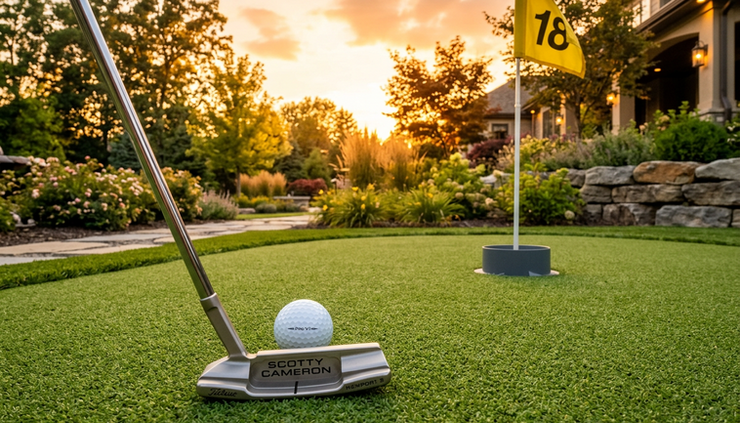
The best next step is to start with the experience you want. Picture the putts, the people, the views, and the way the green should fit into the property. From there, choose materials and installation details that support that goal. When the surface rolls true and the space looks finished, the green becomes more than an upgrade. It becomes a reason to step outside and play.


Comments